
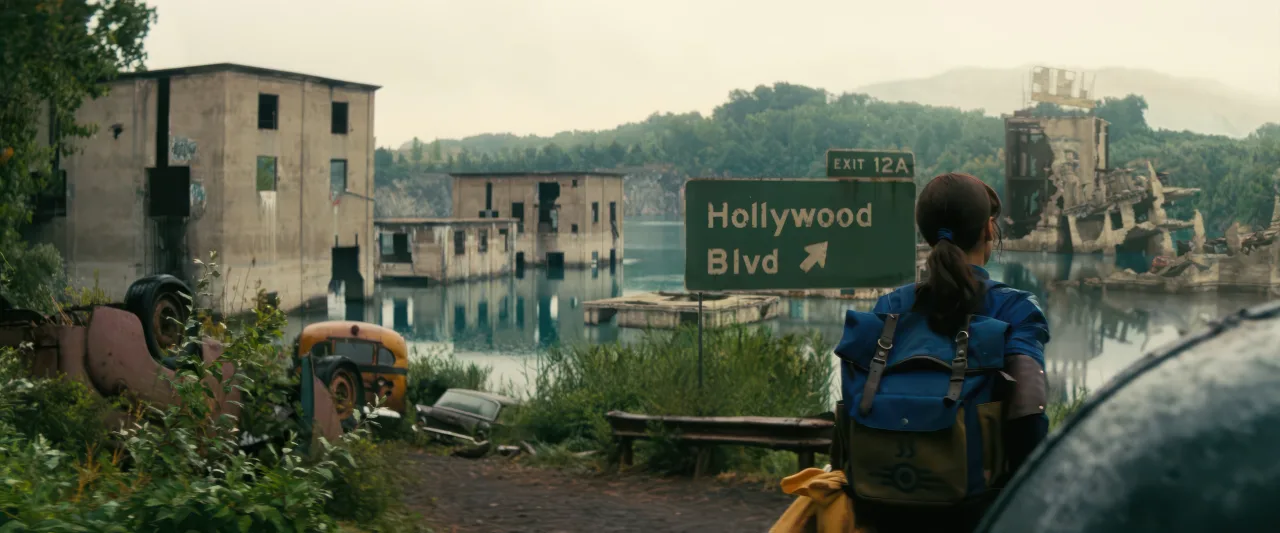
Walk the multiplex this year and you can feel the math wobbling. The studios are still spending like the old rules apply — nine figures a picture, a cinematic universe stapled to every release, a marketing budget that could fund a small country — and the returns keep shrinking. Meanwhile, the films people actually talk about and remember are coming from somewhere else entirely: directors nobody had heard of two years ago, working with a fraction of the money and none of the permission.
We notice because it's the work we do. Fish Pot is a New Orleans house built on the idea that a film's character comes from the people making it, not the size of the check behind it. So watching that principle win at the highest level — the box office, the Oscars, the franchise hand-offs — feels less like a trend than a correction.
A movie that cost less than a studio's catering bill
Consider Obsession. Curry Barker, twenty-six and best known until recently for YouTube videos, directed it as his first feature, shooting the whole thing in roughly three weeks for about $750,000. No recognizable cast, no existing property, no studio behind him.

It premiered in TIFF's Midnight Madness slot and detonated. A24 wanted it. NEON wanted it. Focus Features won, paying north of $15 million — what The New Yorker flagged as the richest genre acquisition in festival history. And the bet paid off in a way no spreadsheet would have predicted: the film has since crossed $224.7 million worldwide, making it the highest-grossing movie in Focus Features' entire history, ahead of Downton Abbey.
Run the only math that matters. A $750,000 budget against roughly $224.7 million worldwide is a return of nearly 300 to 1 — every dollar that went in has come back, so far, as about three hundred. The studios chase that multiple with hundred-million-dollar blockbusters and almost never find it. A twenty-six-year-old got there with a three-week shoot and an idea scary enough to sell itself — and handed the studio that distributed him the biggest hit it has ever had.
Anora and the case for telling the truth
Sean Baker made the other definitive argument. Anora cost around $6 million — pocket change by studio standards — and it's about precisely the kind of person Hollywood usually leaves in the margins. No spectacle, no franchise machinery, just a specific, unflinching story told with confidence.
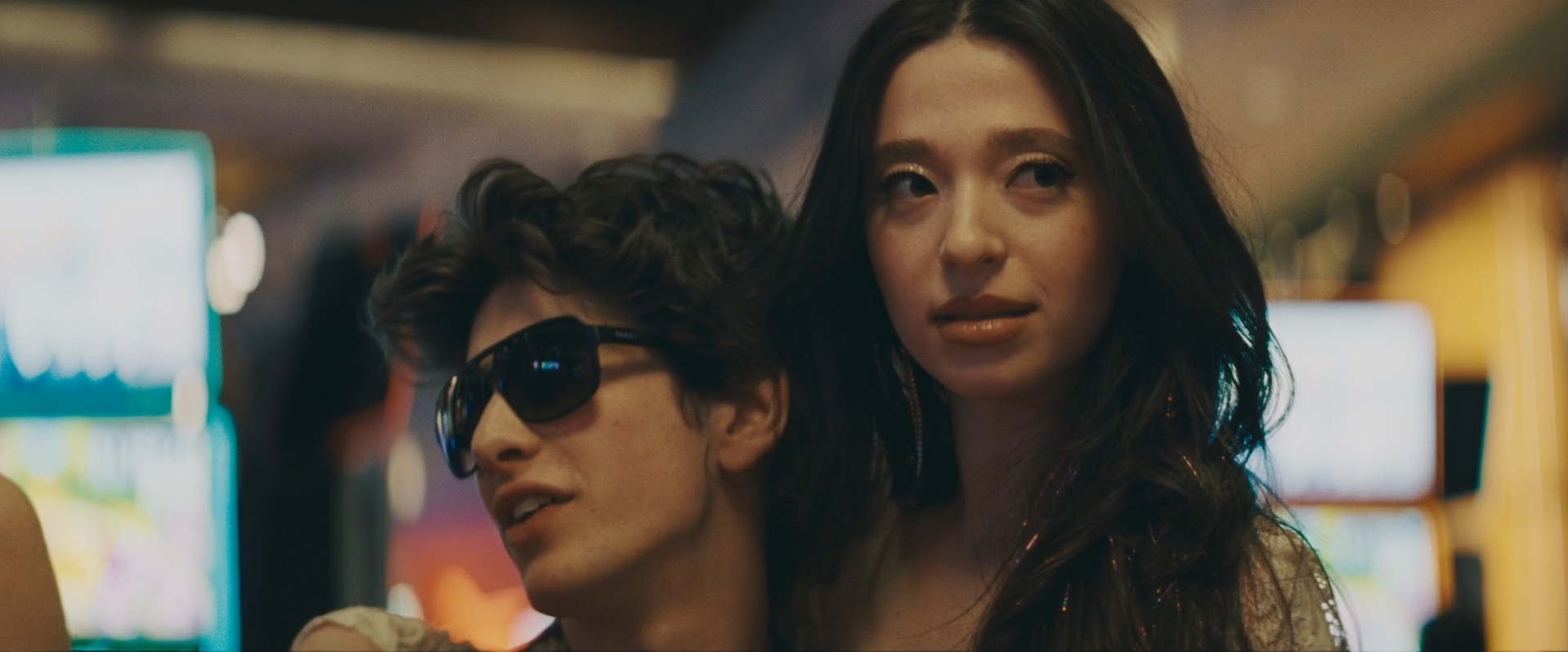
At the 97th Academy Awards it took five trophies, including Best Picture, Best Director, and Best Actress for Mikey Madison. Baker himself collected four competitive Oscars in one evening for a single film — producing, directing, writing, and editing it — a clean sweep no filmmaker had ever pulled off. One of the leanest budgets ever to claim Best Picture, and it earned back roughly ten times its cost.
The takeaway isn't complicated. Hand an audience a real story about real people and they'll meet you there. The problem was never the appetite. It was the supply.
The companies betting on vision are the ones winning
The genuine power players now don't carry legacy-studio logos. A24, NEON, and a cluster of independent producers have made their names backing exactly the films the majors flinch from — the strange ones, the abrasive ones, built around a single point of view instead of a test screening.
Yorgos Lanthimos is the patron saint of that approach. The Greek director has spent his career making films that refuse to soften — Dogtooth, The Favourite, Poor Things — proving an uncompromising voice isn't a commercial handicap but the engine. He wins over critics and fills theaters at once, doing the one thing the franchise model can't: surprising people. That's the operating logic now — not "what's the safest version of something that already worked," but "what does this particular artist notice that no one else would."
When the rebels get handed the keys
It's no longer just indies beating the studios in the market. The studios are now coming to the indies and asking for help.
Zach Cregger is the cleanest case. Barbarian was a $4.5 million sleeper; his follow-up, Weapons, ran about $38 million and pulled in roughly $270 million worldwide while landing near the top of most critics' lists. So when it came time to relaunch Resident Evil — one of the most valuable game franchises in existence — the rights holders didn't reach for a safe pair of hands. They gave it to Cregger, a director with one major release to his name, and reportedly handed him a free hand to drag the property somewhere new specifically because his sensibility is so distinct.
Sit with the irony. The system that spent twenty years smoothing the personality out of everything it produced is now chasing the most personal directors it can find to rescue its biggest franchises.
The uncomfortable part of a 300-to-1 return
There's a catch, and it deserves to be told honestly. A 300-to-1 return doesn't only mean a director got rich and a studio got its biggest hit ever. It also means a lot of people did skilled work on a generational moneymaker and saw almost none of the upside.
One of them said so out loud. Sally Choi, the film's art director, posted that she was paid $300 a day — about $6,741 after taxes across 22 days, no mileage — on a film now grossing north of $224 million. She'd agreed to the rate going in, and noted this is simply the reality below the line; by her account, some crew worked essentially as volunteers, covered only for gas. The lead, Inde Navarrette, reportedly made around $20,000. Opinion split hard: some told Choi she'd consented to a fair rate and should ride the credit to a bigger career; others noted that "you agreed to it" is exactly the logic that keeps the system from ever changing.
Both are true. The arrangement was standard — crew get flat day rates with no backend, which is reserved for stars, directors, and producers — and a $750,000 budget is genuinely too small to make a union feature without people working below market. The deal only looks unfair because the film became a historic anomaly nobody predicted. But that doesn't erase the point: a structure that pushes below-the-line costs as low as possible while routing all the upside above the line feels rotten the moment a small film hits big.
So what should happen? There's no automatic mechanism, but there are working models. Some studios pay discretionary "success bonuses" when a cheap film overperforms — goodwill, not obligation. More durable is what Sing Sing did: everyone from Colman Domingo to the most junior crew member took the same SAG-scale day rate, then shared a real equity stake, with 40% of revenue flowing into a profit pool split by days worked. "Cheap to make" can't quietly mean "cheap to the people who made it." If a $750,000 film can return $224 million, the next model should share the win on the way up — not litigate it on social media after the fact.
That's not just an observation for us; it's a conviction we're building the studio around. We believe equity should be baked into a production from the start — written into the plan on day one, not bolted on after someone goes ballistic online. And we want everyone who works on a Fish Pot film to understand that going in: if the thing we make together connects, the upside was designed to reach them too. Fairness shouldn't be a reaction. It should be part of the budget.
A word on going union
We should name the thing this conversation usually circles: flipping. To "flip" a production is to take it from non-union to union after the cameras are already rolling — most often when a crew member or a union rep calls it in, and the shoot converts mid-stream to union wages, hours, and benefits. It's the exact move Obsession's art director said she wishes she'd made. So let's be plain about where we stand: we're pro-union. Workers organizing a set is a sign of a healthy industry, not a threat to one.
It also doesn't take a studio-sized budget. SAG-AFTRA built tiered low-budget agreements for precisely this reason — Ultra Low Budget for films at or under $300,000, Modified Low Budget from $300,000 to $700,000, and the Low Budget Agreement from $700,000 to $2 million — each with reduced day rates so a small film can go union without pretending to be a blockbuster. Going union and staying small simply aren't opposites; at $750,000, even Obsession sat inside a union-friendly tier.
We're not a big-budget studio, and we won't pretend the economics are ever simple. But our answer is the same whether a given film is union or not: treat the people who make it fairly, and design that fairness in from the start. Baking equity into the budget isn't a way to route around the unions — it's how we try to make sure nobody on a Fish Pot set ever has to flip a production, or go public, just to be valued for the work they did.
What the union says. We interviewed Brook Yeaton, President of IATSE Local 478 in Louisiana, to hear his take on the future of film and where the union stands. On baking profit-sharing into a film's budget from the start, he was direct: "I think that's a great idea. Talk about incentive for people to work. I don't really think there are any pitfalls [to profit-sharing]." Asked whether the low-budget indie surge is actually good news for his members, he pointed to where the money is now: "Today you see independent productions like A24, Blumhouse, and Neon with pretty substantial budgets — the crew can be unionized, and with that comes all the health and pension and benefits of being a union member." And he was clear the union is a resource even for films that can't afford a contract: "I visit non-union shows all the time that I know can't afford a union contract — just to extend a hand and say hello, but also to check for safety and talk to the crew."
Brook Yeaton also runs Mobtown Prop Rentals in Harahan, Louisiana — hand props and set support for crews working in and around New Orleans.
You can buy the machine. You can't buy the audience.
There's a bigger structural story underneath all this. While the creative center of gravity drifts toward independent filmmakers, ownership of the legacy machine is consolidating into very few hands — and increasingly political ones. In 2025, David Ellison's Skydance absorbed Paramount; as of early 2026 his company is pursuing a roughly $110 billion acquisition of Warner Bros. Discovery that would pull CNN, the Warner library, and HBO under one roof. The Ellisons are openly aligned with the current administration. Since the Paramount deal closed, the company phased out its diversity programs, installed an "ombudsman" to police newsroom "bias," brought in Bari Weiss to run CBS News, and spent around $150 million to buy her outlet, The Free Press.
You don't have to take a side to notice the pattern. Senators including Elizabeth Warren have argued that a handful of Trump-aligned billionaires are trying to seize control of what audiences watch, and reporting at NPR and elsewhere tracks the same consolidation. Whether narrative control is the goal or just the effect, the direction is hard to dispute: fewer owners, more political alignment, tighter editorial grip.
Here's why it matters. Money can consolidate the infrastructure — studios, libraries, cable bundles, news desks. What it can't consolidate is the part that generates value: a specific person with a specific vision an audience wants to see. The tell is in the deals. Obsession wasn't developed inside any of these empires; it was made for $750,000 outside the system, and then the giants lined up to buy it — it went to Focus Features, a Comcast label. That's no accident: the majors have run "indie" storefronts for decades — Universal's Focus, Disney's Searchlight, Sony Pictures Classics — built since the early '90s to capture the independent market they couldn't replicate from the inside. When a conglomerate wants a film like Obsession, it doesn't make one; it buys one and stamps a smaller logo on it. The most consolidated industry in entertainment increasingly has to go shopping at the indie table for the thing it can't manufacture in-house. You can own every pipe in the country and still not own the imagination flowing through them. Consolidation can capture the channel. It keeps losing the culture.
Why a blockbuster can never make 300 times its money — and what it does instead
It's worth pausing on why the studio model can't answer a number like 300 to 1. A blockbuster — the kind of giant, franchise-anchoring movie a studio builds its whole year around — isn't designed for return on investment; it's designed for scale, and scale cuts both ways. The Marvels carried a budget around $274.8 million and grossed roughly $206.1 million — it lost money, with reported losses approaching $300 million after marketing, the worst theatrical result in the studio's history. Ant-Man and the Wasp: Quantumania ran a true cost north of $330 million against about $476 million in tickets and barely limped to break-even. A $300 million budget is a $300 million denominator. You can make a fortune off a film like that, but you can never make 300 times your money, because the budget that buys the spectacle also caps the upside.

And the numbers are just a symptom. The deeper problem is purpose. A franchise on this scale isn't an attempt to make art; it's an investment vehicle wearing a movie's clothes. The questions that drive it are financial — what tests well, what protects the brand, what offends the fewest people in the most territories. Reasonable questions for a hedge fund. Poison for a story. When the only goal is the money, the things that make a film worth watching — risk, strangeness, a point of view willing to alienate someone — get sanded off first. Do that long enough and you lose the soul of the thing, and the art goes with it.
So if you've watched a $750,000 film outperform your blockbusters on every metric that matters, what do you do? You can't out-cheap the indies, and you can't manufacture a vision on a spreadsheet — so the move is the one the industry always makes when it can't beat something: absorb it. The giants line up to buy films at the festival; NEON has reportedly been in talks to sell a major stake; A24 has drifted up to $65–70 million budgets on films like Marty Supreme. The absorption rarely looks like a hostile takeover — it looks like a generous offer, a minority stake, a budget that quietly triples, a director handed a franchise and a note about "four-quadrant appeal." None of it is villainous on its face. But each step pulls the work closer to the machine's gravity, and that gravity is what made the work safe and forgettable to begin with.
And here's the irony that makes the whole strategy a trap. Even when a giant buys a tiny film and turns a tidy profit on that one title, it doesn't fix anything — because the profit lands on top of an overhead the indie never carried: bloated development slates, layers of executives, debt from the last mega-merger, streaming bets still bleeding cash. A single acquired hit is a rounding error against all of it. The independent makes $224 million look like a miracle because there was nothing underneath it to feed; the conglomerate makes the same money disappear into a balance sheet that was already underwater. It's the frog in slowly heating water — no single deal looks fatal, the temperature only ticks up a degree. Buying the films that beat you isn't a turnaround. It's a more expensive way to lose slowly.
What it all adds up to
There's a pattern underneath every one of these stories, and it isn't luck. Audiences have developed a sharp nose for caution. A film engineered by committee to avoid any risk feels exactly like what it is, and people are voting against it with their wallets. A film made by one person who genuinely needed to make it feels like the opposite — and that gap is now measured in tens of millions of dollars.
The next era of film doesn't belong to the franchise assembly line. It belongs to the filmmakers who still have something urgent to say, and to whoever is smart enough to fund them and then step aside. Hollywood never actually owned the art. It owned the means of making it — the money, the cameras, the soundstages — and the channels for getting it seen. That was the whole of its power, and every piece of it is slipping: the gear is cheap now, the budgets can be tiny, and the audience finds the work with or without a studio's blessing. We've always believed conviction beats permission. The numbers just stopped making it a matter of belief.
Sources: Deadline: Obsession $224M record, Hollywood Reporter: Obsession box office, World of Reel, Wikipedia: Anora, ScreenRant: Sean Baker Oscars, Variety: Resident Evil, ScreenRant: Weapons box office, BroBible: Obsession art director pay debate, Hollywood Reporter: Sing Sing equal pay, NPR: Paramount–Warner Bros. merger, Jacobin: Pro-Trump billionaires and media consolidation, Saturation.io: The Marvels budget & box office, SlashFilm: Quantumania profitability, Hollywood Reporter: Neon stake sale talks, SAG-AFTRA: Low Budget agreements, SAG-AFTRA: Ultra Low Budget, Wrapbook: what to do when a production gets flipped, Wikipedia: Independent film (studio specialty labels).